
Taylor County Parole vs Probation
Parole and probation can both place rules on a person living in the community, but they begin in different ways. The Georgia State Board of Pardons and Paroles decides parole. A parolee has left state prison before the maximum sentence expires and remains subject to Board conditions. Probation comes from a sentencing court. Felony probation is generally supervised by the Georgia Department of Community Supervision, while a misdemeanor case may remain tied to the sentencing court and its approved provider.
A Taylor County Jail release is not, by itself, proof of either status. Bond may explain the release. A court may also order probation, or a person may transfer into GDC custody and later receive parole. Read the court disposition and the state record together.
| Point | Parole | Probation |
|---|---|---|
| How it starts | Board-authorized release from state prison | Sentence ordered by a court |
| Main record | Board parolee search and GDC history | Court disposition and supervision record |
| Taylor County contact | DCS Columbus for community supervision | DCS Columbus for felony cases; court/provider for some misdemeanors |
| How it ends | Board discharge, expiration, or other formal action | Completion or formal court/supervision discharge |
- Parole
- Conditional community release from a state-prison sentence.
- Probation
- A court sentence served under stated rules in the community.
- Discharge
- Formal completion or termination of supervision.
- Absconder
- A supervised person alleged to have stopped reporting or left supervision without approval.
Verify Taylor County Post-Release Supervision
Start with the custody path, not a guess based on the charge. The Board's official parolee search is designed for people already released on parole. The GDC offender search helps separate a state-prison history from a county-jail booking. A court record is crucial for probation because it identifies the sentence, court, and terms. Taylor County Superior Court records may be reached through the Georgia Courts e-access provider path, while Magistrate and Probate records remain with those courts.
- Check the Taylor County roster to decide whether the person is still shown as currently booked or has a released status.
- If a state sentence appears, use the official parolee search for post-release parole status.
- Compare the name with GDC identifiers or the court case. This helps avoid a same-name error.
- Read the sentencing court's disposition to determine whether probation was ordered and whether it is felony or misdemeanor supervision.
- Use the DCS field-office record to identify the regional office serving Taylor County. Ask the originating agency for formal proof when a public screen is unclear.
The Board's Tentative Parole Month lookup serves a different purpose. A TPM marks a month for final review. It is not proof that parole has been granted or that release occurred. Misconduct or unmet conditions can postpone or cancel it.
Taylor County's Regional Supervision Office
Taylor County does not use a Butler-based DCS field office. The Columbus DCS field office serves Taylor County and the Chattahoochee Circuit, along with five other counties. That regional setup matters when a released person expects the supervision office to be near Taylor County Jail. The public office listing identifies the office, its weekday schedule, and its chief.
Georgia DCS, Columbus Field Office1334 Second Avenue
Columbus, GA 31901
Phone: 706-649-0584
Fax: 706-383-3169
Monday-Friday, 8 a.m.-4:30 p.m.
Coordinating Chief Elton Edwards
This office is the practical state contact for Taylor County felony probation and parole supervision questions. It does not replace the sentencing court, and it should not be treated as the custodian of the Taylor County jail release record.
Taylor County Violations and Warrants
Conditions vary by order and case. They can include reporting, obeying court rules, completing programs, and following limits set by the Board or court. A violation allegation does not explain its own outcome. The supervising agency and court record show whether officials sought a warrant, changed conditions, continued supervision, or returned the person to custody.
No Taylor County public absconder list was found in the research. The jail roster may show a probation-violation or failure-to-appear charge when a person is booked, but that is not a complete supervision list. An absconder label means an agency alleges the person stopped complying or reporting. A warrant is a court or authorized order for custody. Neither should be inferred merely because a person cannot be found in a web search.
How Taylor County Supervision Ends
Supervision ends through a formal event, not simply because an online entry disappears. Parole may end at sentence expiration or through a Board discharge or other action. Probation may end when the ordered term and conditions are complete, or when a court changes or terminates the sentence. Revocation can instead return a person to custody.
The durable trail may include the sentencing order, later court orders, a parole record, and DCS documentation. For the earlier local custody phase, the Taylor County released-inmate search and records path explains how a jail release status differs from a supervision discharge. If a public portal omits the detail, request the record from the office that created it. Georgia's Open Records Act does not require an agency to create a new report when no existing record answers the question.
Taylor County Parole Decision Timing
Georgia does not publish routine parole consideration as a Taylor County hearing calendar. Public Board meeting notices appear through the Board's news stream, but the person-specific timing tool is the Inmate TPM Lookup. A TPM means the Board plans a final review during that month. If appropriate, it may then set a release date.
Possible outcomes include a parole date, postponement, cancellation, reconsideration, or no parole. Eligibility depends on Georgia law and the sentence. Serious violent felony and mandatory-service rules can limit ordinary parole timing, so a broad percentage should never be applied to every state case. After release, the parolee search becomes the better public status tool. Formal orders or revocation details may require contact with the Board.
The Board home and news page is shown in the captured source below. It provides statewide meeting and agency context, not a county release calendar.
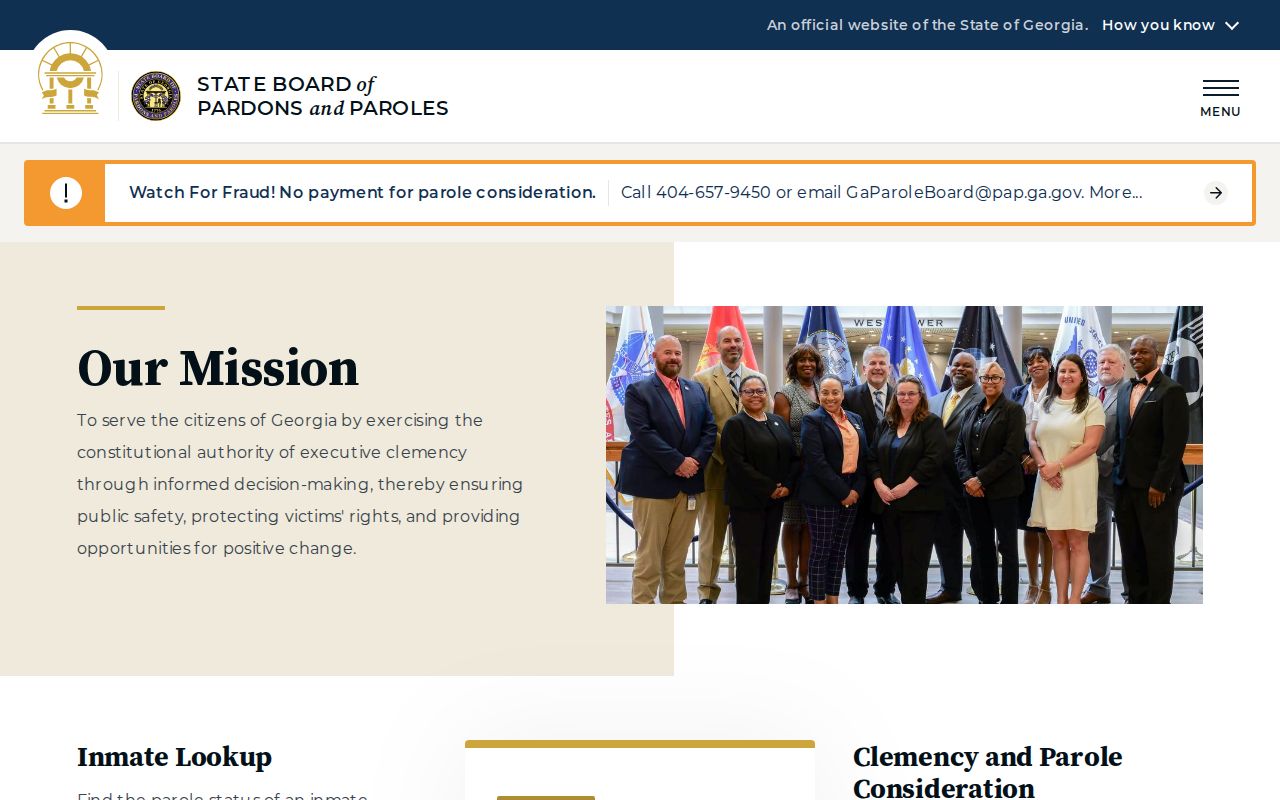
Use the Board's person-specific tools to answer status questions, and treat public meeting notices as agency context only.
Taylor County State Release Cards
A state-prison release has logistics that do not apply to a Taylor County Jail discharge. GDC says a person leaving its custody may receive remaining account funds through a Georgia Release Card. The recipient activates the card and establishes a PIN through the card process. This is a funds-delivery method, not proof of parole, probation, or the exact release reason.
Keep the systems separate. Taylor County Jail property and funds policies must come from the jail. GDC's release-card rules apply to a GDC release after a Taylor County sentence has moved into state custody. A parolee may then report through DCS Columbus, while someone discharged at the end of a state term may have no ongoing parole supervision. The GDC record, Board record, and DCS record each answer a different part of that path.
Taylor County Probation Court Path
Probation verification often returns to the court named in the jail entry. Taylor County's roster may identify Magistrate, Superior, Probate, or another court. Superior Court handles felony cases, and its clerk keeps the official court record. Magistrate Court handles warrants, certain misdemeanors, and bail when the matter is not reserved to another judge. Probate Court handles county traffic citations and may address payment plans when probation is ordered.
That split prevents a common records mistake. DCS Columbus can identify the regional state-supervision route, but it may not hold the full sentencing order or a misdemeanor provider's record. Start with the docket and final disposition, then follow the supervision agency named there. If the order later changed, seek the later order as well. A release status from Taylor County Jail only establishes the local custody event, not whether every court condition has been met.
Note: A court disposition and a supervision discharge answer different questions, so retain both when formal confirmation matters.
Public Record Search
Sponsored Results